Is a Tub-to-Shower Conversion Worth It in Michigan?
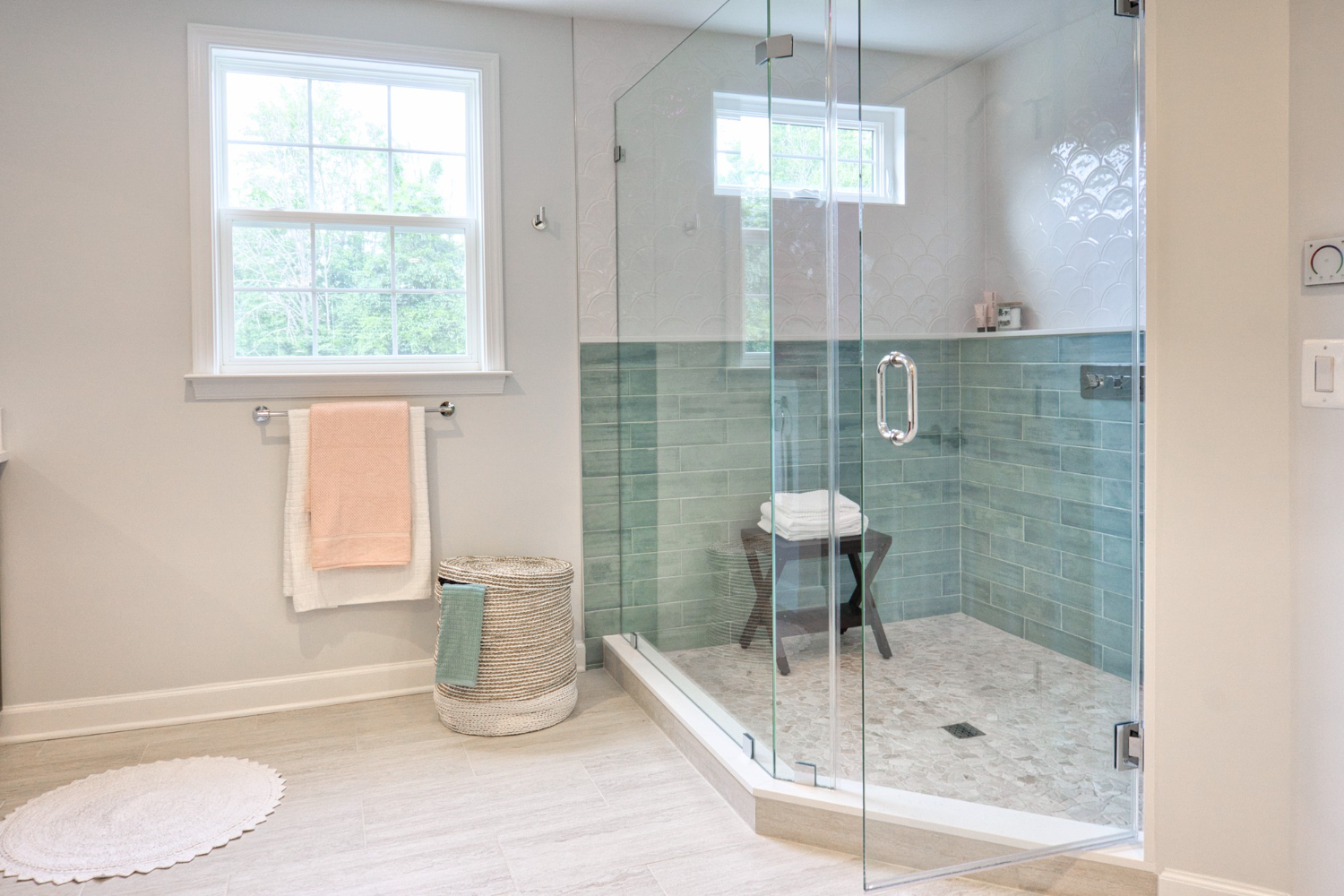
For most Michigan homeowners, a tub-to-shower conversion is worth it because it improves everyday usability, creates a more open bathroom, and can strengthen buyer appeal. The best choice still depends on how many bathrooms your home has and who is most likely to buy in your local market—particularly whether the home will appeal to families with young children or to adults who value easy-access bathing.
For homeowners in Birch Run, Saginaw, Frankenmuth, Grand Blanc, and throughout Mid-Michigan, the goal is not simply to remove a tub. It is to create a shower that is attractive, durable, comfortable, and built correctly behind the finished surfaces.
When a Tub-to-Shower Conversion Makes Sense
A shower conversion is often a smart investment when the existing bathtub is rarely used, difficult to step over, dated, stained, or taking up valuable visual space. A properly designed walk-in shower can make a smaller hall bath feel less crowded and can turn an underused primary-bath tub into a feature you enjoy every day.
This is especially true for empty nesters, busy professionals, and households planning to age in place. A low-threshold or curbless-style shower, appropriately planned for the room and structure, can reduce the daily barrier of climbing into a tub. Features such as a built-in niche, bench, handheld showerhead, grab-bar blocking, and easy-clean tile can add meaningful long-term convenience without making the room feel institutional.
At Shooltz Remodeling Advantage, we often encourage homeowners to begin with how they actually use the space. If the tub has become storage for shampoo bottles rather than a place to bathe, a Shower Remodel
may provide far more value to your household than keeping a fixture that no longer fits your routine.
The One-Tub Rule: Protecting Resale Flexibility
The most important resale guideline is simple: try to keep at least one bathtub somewhere in the home. This “one-tub rule” is not a legal requirement, but it is a practical rule of thumb because many buyers with infants or young children want a bathtub. Removing the only tub can narrow your future buyer pool, particularly in family-oriented neighborhoods.
If your home has two or more full bathrooms and one bathroom will retain a tub, converting another tub to a shower is typically a lower-risk decision. In a primary suite, a spacious shower is often more appealing than a small, seldom-used tub—especially when the home already offers a functional tub in a hall or secondary bath.
If you own a one-bathroom home in Saginaw, Frankenmuth, or Grand Blanc, the decision deserves more thought. A conversion can still be absolutely right for your lifestyle, but it should be designed as a quality improvement rather than assumed to be a guaranteed resale win. Consider how soon you expect to sell, the age and needs of likely buyers, and whether accessibility matters more to your household than maintaining a tub.
What the Conversion Process Should Include
A professional tub-to-shower conversion is more involved than removing one fixture and setting another in its place. The work usually begins with protecting adjacent areas, demolition of the old tub and surrounding wall finishes, and an inspection of the framing, plumbing, and subfloor. That inspection matters: hidden moisture damage, weak flooring, or outdated plumbing should be addressed before beautiful new finishes cover the area.
Next comes shower layout and plumbing work. Keeping the drain and valve in roughly the same locations can help control cost, while moving plumbing, enlarging the footprint, adding body sprays, or changing wall locations adds complexity. The shower base must then be properly sloped toward the drain so water does not stand on the floor.
From there, the assembly is built for durability: suitable wall substrate, a compatible shower pan system, waterproofing at seams and transitions, and carefully planned details around corners, niches, benches, and plumbing penetrations. Tile and grout alone are not a waterproofing system. The waterproof layer behind or beneath the finished surface is what helps protect the framing and surrounding rooms from water intrusion.
Finally, the shower is finished with tile or wall panels, fixtures, glass or a curtain solution, trim, and any related updates to lighting, ventilation, flooring, or paint. Shooltz Remodeling Advantage takes an owner-led approach, with Brian Shooltz personally involved from the estimate through the final walkthrough—an important advantage when a project depends on precise carpentry and moisture-management details.
Waterproofing Is the Non-Negotiable Detail
Michigan bathrooms face ordinary daily moisture plus seasonal humidity and temperature changes that can expose weak construction over time. A shower must be treated as a wet-area system, not as a decorative tile project. Proper waterproofing includes a correctly prepared base, a shower pan or membrane system, sealed seams, protected corners, and proper treatment around fixtures.
Ventilation is part of the equation, too. A correctly sized, properly vented bath fan helps remove moisture after showers and supports the longevity of paint, trim, drywall, and finishes outside the shower enclosure. When homeowners compare estimates, it is worth asking exactly what shower waterproofing system will be used and how the contractor handles niches, benches, and transitions.
How Much Does a Tub-to-Shower Conversion Cost?
Cost varies widely because a basic replacement and a custom shower are not the same project. In Mid-Michigan, a straightforward conversion using durable standard materials and limited plumbing changes may fall in the lower end of a broad project range, while a fully tiled shower with custom glass, a niche, bench, upgraded fixtures, and repairs behind the walls can require a substantially larger investment.
The biggest cost drivers are the condition of the existing space, plumbing relocation, shower size, tile selection, waterproofing method, glass, fixture quality, and whether the project expands into a broader Bathroom Remodeling
update. Keeping the existing layout is generally the best way to manage budget. An on-site estimate is the only reliable way to price your home, because it accounts for the room’s structure, access, and the finishes you want.
Expected Timeline for a Shower Conversion
A simple conversion may move quickly once materials are available, but a custom tile shower should not be rushed. Demolition, plumbing adjustments, substrate preparation, waterproofing, curing time, tile installation, grouting, and glass measurement all require coordination. Many projects take roughly one to three weeks of on-site work, with custom glass or specialty materials sometimes extending the overall schedule.
Planning early helps avoid delays. Choose tile, fixtures, vanity finishes, and glass preferences before demolition whenever possible, and build in a little flexibility for discoveries behind older walls.
What Is the ROI Case for Different Households?
For a homeowner staying long term, the return is primarily daily comfort: easier entry, better storage, a more functional layout, and a bathroom that feels current. For an accessibility-focused household, the value can be even greater because a low-threshold shower may help the home remain workable through changing mobility needs.
For sellers, bathroom remodeling typically recovers only part of its cost directly at resale, so it should not be approached as a dollar-for-dollar investment. Its real advantage is marketability. A clean, thoughtfully designed, well-built shower can help a home feel cared for and move-in ready. Keeping one bathtub elsewhere preserves the broadest appeal while allowing the converted bathroom to serve buyers who prefer a modern shower.
FAQ
Is it a mistake to remove the only bathtub?
Not necessarily, but it is the situation where resale tradeoffs matter most. If you expect to sell soon in a family-oriented market, retaining a tub may be wiser. If accessibility and daily usability are the priority, the conversion can still be the right choice.
Can a tub space become a walk-in shower?
Usually, yes. The final design depends on the room dimensions, plumbing, floor structure, and the type of shower base or tile system selected.
Does a tile shower require waterproofing behind the tile?
Yes. Tile, grout, and caulk are finish materials; a dedicated waterproofing system is essential to help manage water and protect the structure.
Will a shower conversion make my bathroom feel bigger?
Often it will. Glass panels, a low-profile base, light finishes, and a layout that avoids visual clutter can create a more open feeling than a bulky tub surround.
Should I convert the tub or remodel the whole bathroom?
If the vanity, flooring, lighting, ventilation, and wall finishes are also outdated, doing the work together can create a more cohesive result. If those elements are in good condition, a focused shower conversion may be the better fit.
Ready to decide whether a tub-to-shower conversion is right for your Mid-Michigan home? Schedule a free estimate with Brian Shooltz and Shooltz Remodeling Advantage to talk through your layout, resale goals, and the best path to a bathroom built for the way you live.
Our Services
Homeowners across Saginaw County and Genesee County often want more than a contractor who shows up with a low number and a vague timeline — they want to know the person they’re calling will actually be on the job, hold themselves accountable, and deliver work they’re still proud of years later. Too many remodeling experiences feel anonymous, with homeowners unsure who’s in their house, who to call if something’s off, and whether the craftsmanship will hold.
Shooltz Remodeling Advantage was built as a family-owned remodeling company in Birch Run, MI to offer Mid-Michigan homeowners something more direct: an owner-led operation where Brian Shooltz — a master carpenter with over 20 years of hands-on experience — is personally involved in every project from the first estimate to the final walkthrough. No handoffs, no subcontracted surprises. Just honest work, clean job sites, and the kind of craftsmanship that makes additions look like they were always there and remodels look like they were always meant to be.